
Power & Politics examines the uneasy space where authority meets conscience. These essays look beyond party lines to the deeper question of courage—why those who promise to lead so often choose safety instead. Here, politics is not strategy but mirror: a measure of how far conviction can stretch before it breaks.
Archives › Power & Politics
The Firewall Has Fallen: How Bost Just Rewrote the Rules of Power
0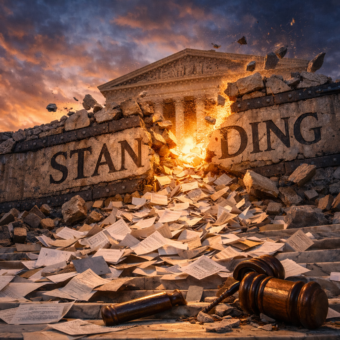
We often look for the end of an era in explosions, riots, insurrections, or shocking election nights. But more often, the architecture of a republic is remodeled in the quiet, carpeted chambers of the judiciary, amidst the rustling of robes and the scratching of pens.
Yesterday, January 14, 2026, the Supreme Court took a sledgehammer to one of the most critical, yet invisible, load-bearing walls of American democracy.
In a 7-2 ruling in Bost v. Illinois State Board of Elections, the Court held that political candidates have automatic “standing” to sue over election rules, regardless of whether they can prove those rules will cost them the election. To the average citizen, this sounds like dry legalese. To anyone who understands the mechanics of the 2020 election, it is a seismic shift that effectively institutionalizes the “forever campaign.”
To understand why this matters, we have to look back at what actually saved the transition of power six years ago. It wasn’t the politicians. It was a procedural doctrine called “standing.” And as of yesterday, that doctrine is dead.
The Unsung Hero of 2020
When we remember the chaotic aftermath of the 2020 election, we remember the noise: the press conferences at landscaping companies, the angry tweets, the march on the Capitol. What we forget is the silence of the courtrooms.
Between November 3, 2020, and January 6, 2021, the Trump campaign and its allies filed over 60 lawsuits. They lost almost all of them. But they didn’t lose because judges examined the evidence of fraud and found it wanting (though that happened occasionally). They lost because they couldn’t get past the bouncer.
That bouncer was Article III Standing.
For decades, federal courts have held to a strict rule: you cannot sue the government just because you are angry about a law. You must prove you were injured by it. In election cases, this meant a candidate had to show that a specific rule, say, a drop box in Wisconsin or a signature cure period in Pennsylvania, specifically cost them votes that would flip the election.
This was the “Standing Firewall.” In case after case, Trump v. Wisconsin, Bognet v. Pennsylvania—judges tossed the lawsuits out at the threshold. They effectively said, “You cannot prove this specific rule caused you to lose, so we will not even hear the case.”
This procedural dismissal was the system’s immune response. It prevented the courts from becoming a tool to delay certification. It kept the clock running, ensuring the “Safe Harbor” deadlines were met, which in turn forced Congress to accept the results.
The Bost Doctrine: A VIP Pass to Litigation
Yesterday, Chief Justice Roberts, writing for the majority, dismantled that firewall.
By ruling that a candidate’s “interest in the integrity of the election process” is sufficient for standing, the Court has removed the requirement to prove specific injury. No longer does a campaign have to prove a rule will cost them the race. They simply have to argue the rule is incorrect.
Justice Barrett, in her concurrence, tried to limit the damage, suggesting standing should be tied to financial costs (the money spent watching polls). But the damage is done. The Majority has effectively ruled that candidates are a special class of citizen with a “concrete and particularized interest” in the rules of the game, separate from the outcome of the game.
The Paradox of the Watchdogs
In a twist of bitter irony, the dismantling of this firewall was aided by the very groups most terrified of the result. During the Bost proceedings, civil rights organizations—typically the guardians of voting access—filed briefs supporting Bost’s right to sue. Why? Because they feared that if the Court narrowed “standing” too much to stop Bost, it would also block them from suing to protect voters in future civil rights cases.
They made a calculated gamble: support the politician’s right to enter the courthouse in order to preserve their own. It backfired. They hoped the Court would grant standing but rule against Bost on the facts. Instead, the Court took their advice on standing and used it to kick the door off its hinges, granting broad license to the very “election integrity” lawsuits these groups were trying to prevent. In trying to keep a key for themselves, they inadvertently unlocked the gate for the opposition.
The Weaponization of “Discovery”
Why does this technicality matter? Because in the legal world, “standing” is the difference between a lawsuit that takes three days and a lawsuit that takes three months.
In 2020, because the plaintiffs lacked standing, they were denied “discovery”, the power to subpoena documents, depose witnesses, and access internal government files.
Under the Bost rules, a losing candidate in November 2026 will not have their case dismissed. They will be granted standing. They will then proceed to discovery. They will be able to force county election boards to turn over server logs, signature databases, and email chains while the count is still happening.
Imagine a close election in Pennsylvania where the result hangs on 10,000 votes. Under the old rules, a lawsuit challenging the signature matching process would be tossed for lack of proof. Under Bost, a federal judge can order a “preservation of evidence” and a “discovery period” to review those signatures.
The counting stops. The certification deadline passes. The “Safe Harbor” protection evaporates.
The Era of “Regulation by Litigation”
We are moving from a system where elections are settled by counting votes to a system where elections are settled by litigating rules.
This decision incentivizes what can only be called “offensive lawfare.” Well-funded campaigns will no longer wait for Election Day to see if there are irregularities. They will sue months in advance to strike down any rule, early voting windows, mail-in deadlines, cure periods, that they view as disadvantageous, confident that the federal courts are now open for business.
We have effectively federalized the minutiae of state elections. Instead of state legislatures deciding how many days you have to mail a ballot, a federal judge will decide if that timeline violates a candidate’s “interest in election integrity.”
The Fragility of the Finish Line
The Bost decision does not guarantee that elections will be stolen. But it guarantees they will be contested.
By removing the procedural barrier that kept the 2020 chaos in check, the Supreme Court has signaled that the “settling” of an election is no longer an administrative task, but a legal one. The transition of power will no longer be determined by who has the most votes on election night, but by whose legal team can navigate the labyrinth of federal discovery before the clock runs out on the Electoral College.
In 2020, the system held because the doors to the courthouse were locked. Yesterday, the Supreme Court just gave every candidate a key.
The Rhyme of Ruin: A Comparative Anatomy of the Nazi and MAGA Regimes
0
The Rhyme of Ruin:
A Comparative Anatomy of the Nazi and MAGA Regimes
Intelligence Briefing
Normative vs. Prerogative State
Audio Overview (14 min)
The aphorism attributed to Mark Twain—that “history doesn’t repeat, it rhymes”—has become a cliché. But in the current moment, it is less a poetic observation and more a forensic necessity. We are witnessing a dissonance in the machinery of the state, a “rhyme” that is becoming increasingly audible to those willing to listen.
At the Falling Skies Journal, we commissioned a deep-dive analysis into the structural erosion of democratic norms. We tasked artificial intelligence and human researchers to juxtapose the rise of the Third Reich (specifically the consolidation period of 1933-1934) against the current administrative and rhetorical landscape of the United States. The goal was not hyperbole, but a cold, hard look at the data.
The Dual State
The core finding of our research, summarized in the audio briefing above, centers on the conflict between the Normative State and the Prerogative State.
The Normative State is governed by laws, statutes, and predictability. It is the bureaucracy, the courts, and the “rules of the game.” The Prerogative State, by contrast, is the arbitrary will of the leader—power exercised outside the law, often justified by “emergency” or the need to crush an “enemy within.”
In the 1930s, the Prerogative State consumed the Normative State through Gleichschaltung (coordination). Today, we see a “rhyme” in the modern attempts to deconstruct the “Administrative State.” Whether it is the reclassification of civil servants to make them firable at will, or the weaponization of pardon powers to legitimize political violence, the mechanism remains the same: the removal of institutional checks on executive power.
The Playbook of Erosion
The accompanying research papers identify several distinct tracks of this erosion:
- The Bureaucratic Purge: Comparing the 1933 Law for the Restoration of the Professional Civil Service with modern “Schedule F” reclassifications. Both seek to replace non-partisan expertise with ideological loyalty.
- The “Big Lie”: A comparative analysis of propaganda. While the mediums have changed (radio then, social media now), the technique of delegitimizing the press creates a shared reality where the leader is the only source of truth.
- The Monopoly on Violence: The research highlights the disturbing trend of pardoning political violence, signaling to paramilitary groups that they act with the state’s blessing.
“This is not about judgement, but a simple factual analysis of the ‘rhyme’ between the periods.”
We invite our readers to review the primary documents below. These are not opinion pieces, but academic assessments comparing legal frameworks, rhetorical patterns, and institutional shifts.
More White Babies: The Architecture of Selective Pronatalism
0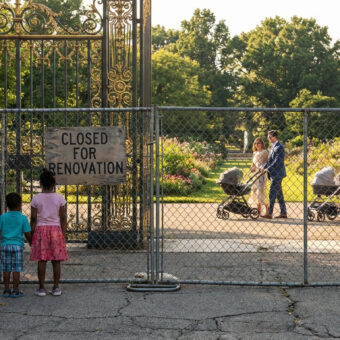
In serious political analysis, we have a dangerous habit of waiting for a confession. We pick apart press releases and scrub sanitized slogans, hunting for the “smoking gun”, some explicit admission of malice. But this search for declared intent is a waste of time. It is an academic indulgence.
We don’t need a lecture on Foucault or Lukes to understand how power operates. We know it doesn’t always announce itself with a bullhorn. It operates in silence. It is diffuse. It is embedded in the daily grind of the institution.
Power is inscribed in the machinery: the reflex of bureaucracy, the patterns of rhetoric, and the cold reality of the scoreboard.
Right now, we are watching a sudden resurgence of “pronatalism”, a government obsession with incentivizing childbirth. If you look closely, this isn’t a universal embrace of family. It is a mechanism of selection. When the state signals a preference for who belongs, it creates a permission structure. It tells the institutions how to behave. At that point, it is analytically irresponsible to pretend the resulting policies are just neutral administrative choices.
We cannot afford to be naive about the history here.
The origins of population management in this country were inextricably bound to the darker philosophies of eugenics. Look at the founders. Margaret Sanger, the architect of the birth control movement, didn’t mince words. She openly advocated for curbing the reproduction of the “unfit.” That label mapped with devastating precision onto race, class, and poverty. While institutions like Planned Parenthood have evolved into vital providers of care, that structural logic, the desire to sort and manage the population, remains woven into the societal fabric.
That historical echo makes the current moment terrifying.
Look at the push for expanding IVF subsidies. On paper, it looks like a benevolent triumph for family building. But look at the operational reality. Access to this technology is gated by income, by employer insurance, and by geography. The data bears this out. High earners get access; low earners get shut out. Employer coverage is heavily stacked in industries that employ white-collar and affluent workers. These gates swing wide open for the wealthy and, by extension, for the predominantly white. They remain obstinately shut for the working class and the marginalized.
At the exact same time, look at what is being destroyed. The support systems that actually sustain the reproductive health of women of color, Medicaid, maternal health initiatives, and community clinics, are facing a relentless attrition of resources.
The juxtaposition is the point. We are seeing a lavish investment in the reproduction of the privileged, paired with a calculated disinvestment in the reproduction of the vulnerable.
This isn’t an accident. It is a specific design. When a policy framework consistently produces a racialized asymmetry, and when those in power refuse to fix it, the outcome is the evidence.
We need to strip away the comforting myths of national innocence. We need to look at the sequence of the slide. Germany didn’t begin its descent into demographic authoritarianism with the camps. It started with rhetoric about “decline” and “purity.” It started with “positive” incentives for national survival. It proceeded through the cultural normalization of hierarchy, bureaucrats sorting births into “desirable” and “undesirable”, long before it ever culminated in violence.
This isn’t just an American experiment. Look at Hungary. Look at Russia. They are running the same play. They push tax breaks and cash incentives for the “right” kind of families, those who fit the government’s specific vision of national identity. It is dressed up as “national rejuvenation,” but the mechanism is the same. It is selective pronatalism.
The early stages were administrative. They were orderly. They were framed as “health.”
I am not claiming the atrocities are identical. I am asserting that the logic is shared. When you have selective birth incentives, combined with rhetoric that elevates the “familiar” over the “other,” the result is demographic shaping. The fact that it is being implemented quietly makes it more dangerous, not less.
If this were truly about supporting “families,” the agenda would look very different. We would see universal childcare. We would see comprehensive parental leave for janitors, not just for executives. We would see massive investment in community clinics to close the gap for marginalized groups.
We don’t see any of that. We see the opposite.
So here’s the trap: we could get lost in debates about “intent”. That would be a luxury we just don’t have. What we have to do is look at the potential outcomes. Real accountability requires us to tune out the soothing words of their speeches and press conferences and focus on the cold, harsh reality of what they are actually doing.
The Sickness of Surrender
0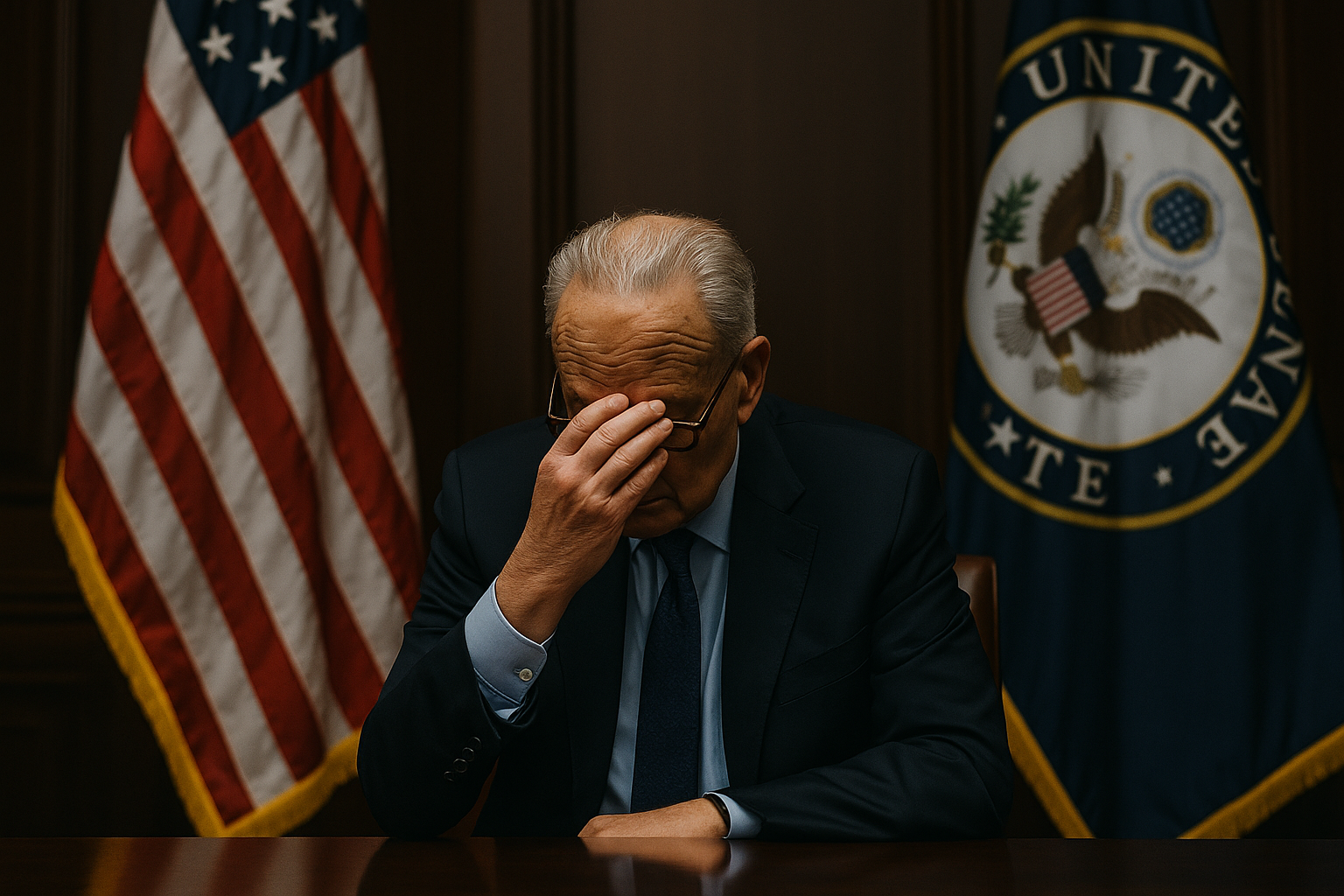
There’s a kind of rot that doesn’t come from corruption or greed, but from cowardice. The kind that spreads quietly through the bones of a people who keep mistaking survival for victory. That’s what happened today.
The Democrats, once the supposed bulwark against cruelty, folded in the face of the same old hostage tactics. They reopened the government, yes. But they did it by bending the knee, again, to the bullies of American politics. They did it without securing the ACA subsidies that keep millions alive, and in doing so, they told 43 million hungry people: your fear was leverage.
Let that sink in. SNAP recipients were used as bargaining chips, pawns in a game that no one with a moral compass should play. The administration had already begun releasing funds they claimed didn’t exist, proof that the “crisis” was manufactured for pressure. And instead of standing firm, instead of holding the line until both food and healthcare were protected, the Democrats blinked. They called it compromise. But what it really is—what it’s always been—is surrender dressed up in moral language.
You cannot keep peace with a bully by giving him what he wants. Every time you do, he learns that threats work. Every time you cave, he grows stronger, more confident, more dangerous. America’s democratic establishment has turned appeasement into policy. And now, millions who depend on affordable healthcare and stable food aid are left to wonder what’s next to be traded away.
This isn’t just political weakness, it’s moral malpractice. If you cannot discern the hill worth dying on, then you have no business calling yourself a defender of the people. The line between pragmatism and betrayal is not as blurry as some would have us believe. The cost of clarity is courage, and courage has been in short supply.
Somewhere in all this, the idea of service to the poor, the working, the vulnerable, was replaced by the art of survival. But survival without integrity isn’t victory. It’s just another form of extinction.
And that’s the quiet tragedy of today: not just that the bullies won again, but that those who claim to fight for justice forgot what justice demands.